
Service / Environment Design · 2018
Limerick Smarter Travel — Riverbank Pathway
Proposals to increase uptake on the newly improved riverbank pathway from UL to the City Centre / Corbally — a wildlife-protection area where the design had to shelter people from the weather without disturbing the flora and fauna.
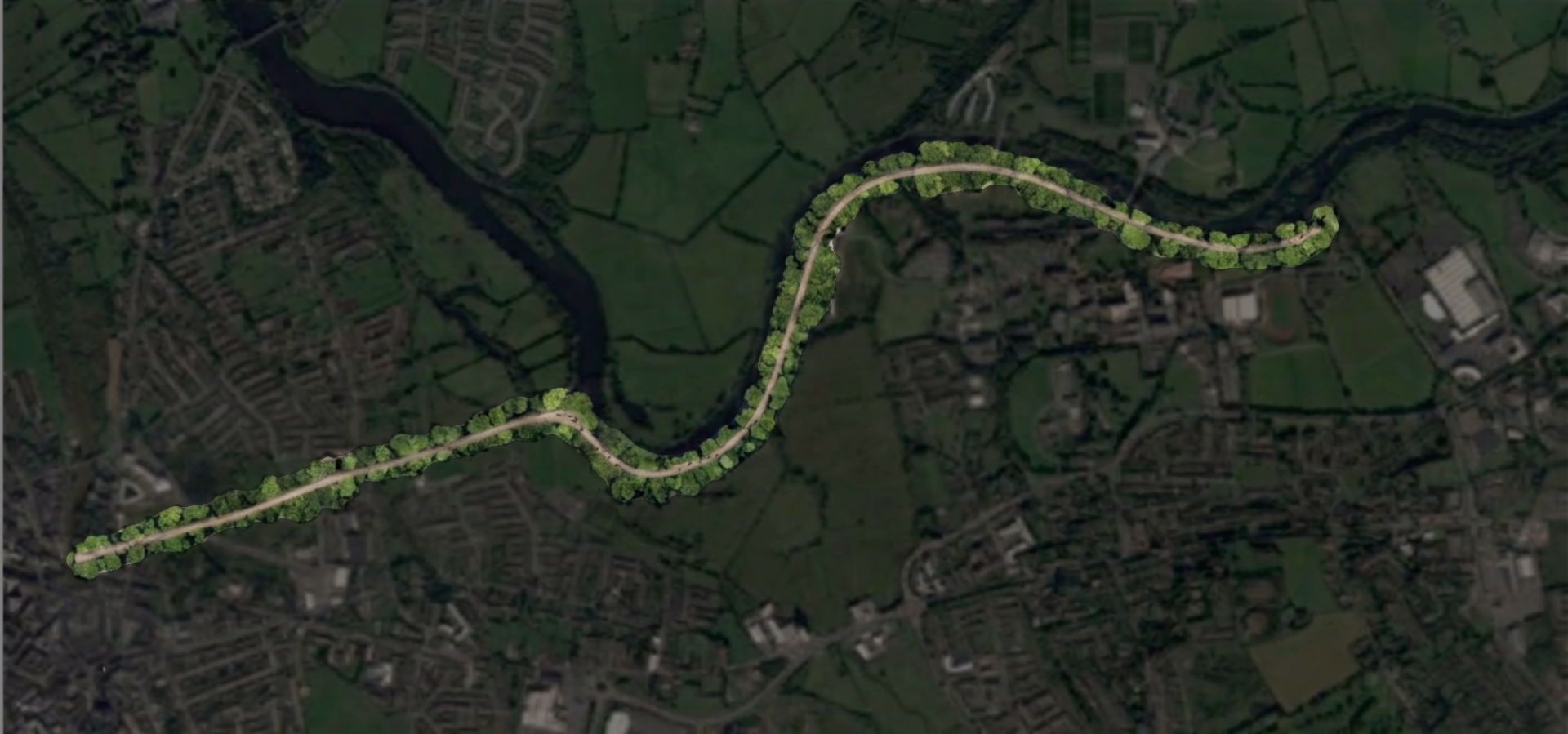
Develop proposals to increase the uptake of users on the newly improved riverbank pathway from UL to the City Centre / Corbally — without compromising the wildlife protection area the path runs through.
- Role
- Ethnographic research, route audit, concept development, visualisation
- Duration
- Semester project
- Tools
- Ethnographic research, On-foot and on-bike audit, Secondary data (Smarter Travel), Sketch, Photo overlay
Objective
‘Develop proposals to increase the uptake of users on the newly improved river bank from UL to the City Center / Corbally.’
Process
Ethnographic research was carried out along the route to gain an understanding of the users' needs, desires and behaviours when making use of the pathway, as well as areas where conflict arises. Users were interviewed about their experiences, and the route was completed on foot and by bicycle to gain an appreciation of the user's experience. Secondary data was provided by the Smarter Travel organisation.
Because the entire walkway is a wildlife protection area, not only did the needs of the users have to be considered but also the environmental impact of the proposed solutions. Any construction along the walkway couldn't adversely affect the flora and fauna of the area, which resulted in great variance between different sections of the path.
Insight
Research showed there was a need to improve security and hygiene along the walkway, and to provide some means of protection from the elements — which was the main deterrent to people using the path.
Security structures such as bike racks couldn't be installed along the pathway due to disruption to wildlife, and bins for refuse would likely worsen the environmental damage to the area. Providing adequate shelter to users was the most obvious option to increase uptake.
Solution — eco-friendly canopy
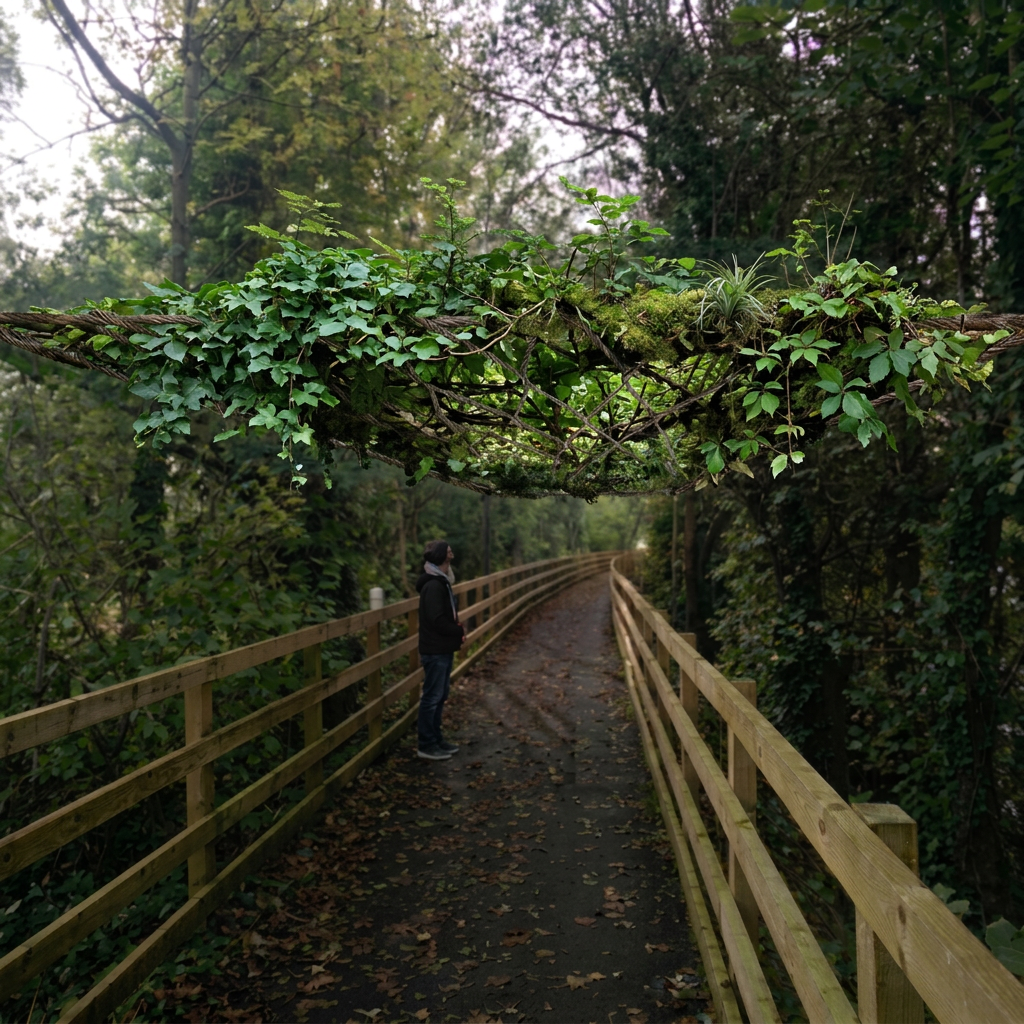
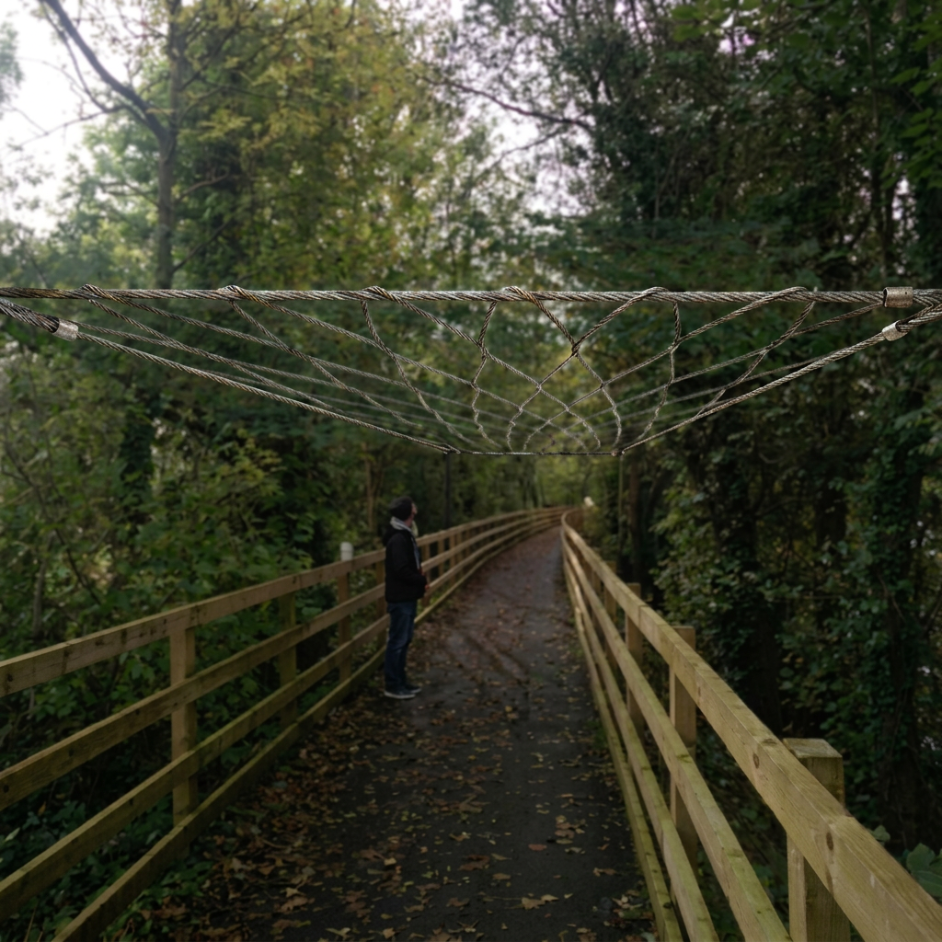
The result was a series of eco-friendly cover options over the walkway. Using existing trees along the path to support a mesh structure via cables, climbing plants would be encouraged to grow around it — forming a natural canopy with two functions:
Primarily, to provide shelter from bad weather without disturbing local wildlife. Secondarily, to provide ample space for nesting birds and the growth of flora through the mesh.