
It could definitely be said that with developments in technology, people who are given access to them generally enjoy an increased level of quality of life. Sometimes, an object might even save your life.
A guest speaker, Bernard Hartigan, one of the designers on the team responsible for the formation of the life-jacket Volvo Ocean Race, got me thinking about this.
When you're designing for something like a life-jacket, there isn't a lot of margin for error, where a fault could result in injury or loss of life. Scenarios must be imagined and prototypes tested in order to make an effective product, its not quite as simple as having a nice idea represented on a page, it involves collaboration between designers, engineers and the users to make something that works as needed, when needed considering the stakes of failure are so enormous.
This could be perceived as daunting, alternatively, it could be how you make the greatest impact on peoples lives, by providing them with the equipment they require to persevere in dangerous conditions such as massive expanses of ocean, construction or a multitude of other scenarios which would be many times more hazardous without the creation of tools to defend us.
Consider all of the safeguards that exist in manufacturing and construction industries, how many builders would be without their toes if it wasn't for the steel toed boot, how many people were protected from harm as a result of protective clothing and the safeguards designed into their tools such as the SawStop table saw which detects contact with skin, stopping the blade and removing it from the table surface in less than five milliseconds. Its not difficult to imagine how many manufacturers could be saved from serious accidental harm as a result of technology such as this.
We have people looking out for us in almost every industry, weather its the safety features integrated into your car by the automotive industry or the hole in the lid of a Bic pen in case its swallowed while you're chewing on the top of it in class. Safety by design is everywhere.
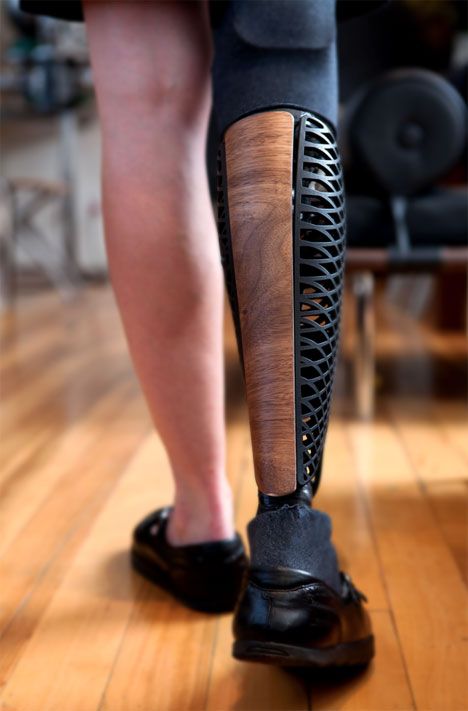
Design isn't just restricted in its applications to preventing injuries and saving lives, sometimes its giving life back, consider, for example the entire field of prosthetics. A replacement limb restores more than just the part of the body that has been lost by the individual, it restores the functionality that the original limb offered to the person, granted, rarely to the same level of functionality. Imagine the difference between having to go about your daily routine missing one or sometimes multiple limbs, the difficulties you'd experience carrying out the most basic of tasks with reduced mobility and then, having your physical capabilities greatly restored by means of a prosthetic. The change in quality of life as a result is almost immeasurable.
This doesn't just apply to prosthetics but across the biomedical field, with new and innovative medical technology continuously improving quality of life, extending lifespans, curing illnesses and making surgery more efficient and less risky.
It has often times been the case throughout history that the development and application of new technology has coincided with a change in standard of living, whether that was the creation of the wheel, a new tool or product. Designing to improve our collective quality of life is arguably the only principle which should matter as so many factors feed into this like experience, aesthetics and functionality.
Next post