
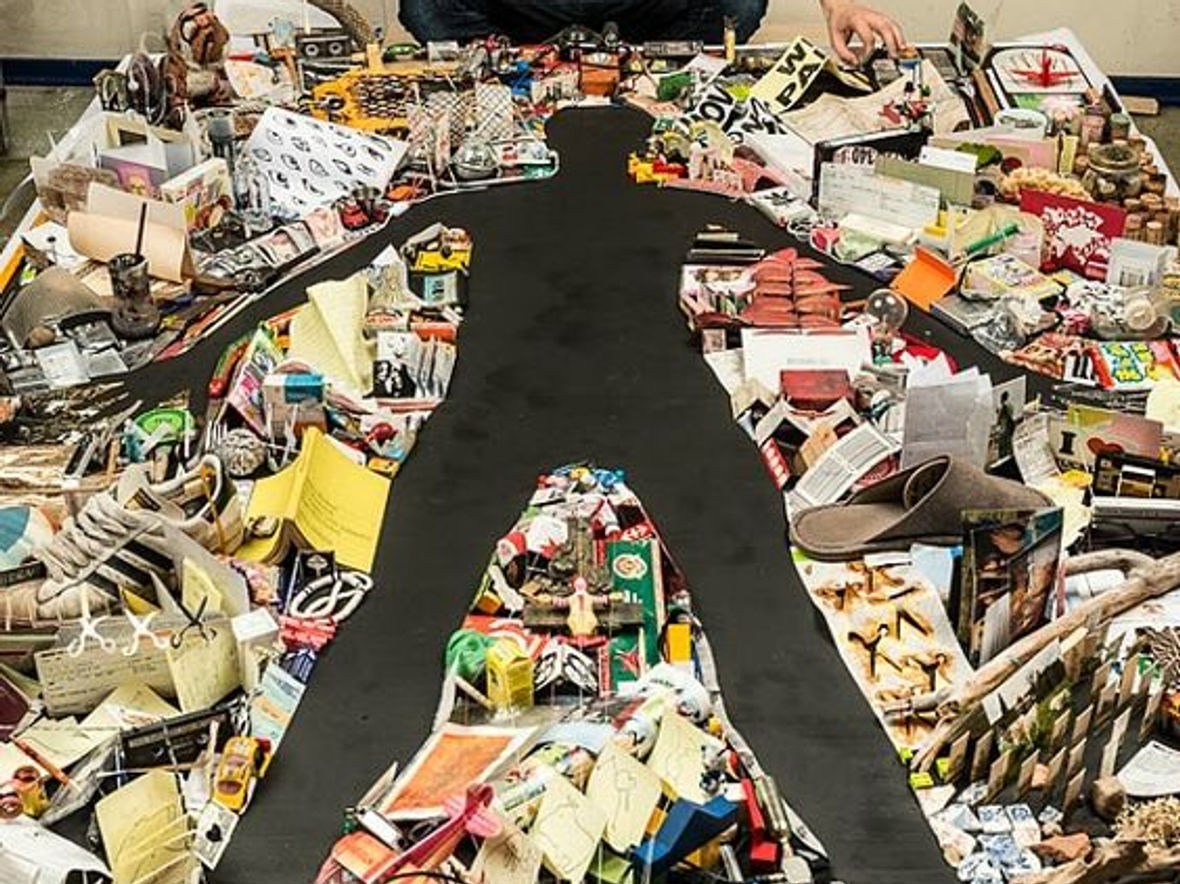
The use and invention of objects is one of the main things that sets us apart from all other species — no other animal has created such a diverse range of tools and products to improve their lives quite like us.
The objects we use everyday often define who we are. Think of an artist's paintbrush, a doctor's stethoscope, a musician's instrument, a lumberjack's chainsaw — they become an extension of ourselves and find themselves as symbols of our cultural heritage.
Archaeologists use the objects they find at sites to interpret what life was like for our ancestors: what they valued, how they made a living, even what was in fashion.
Items can indicate status in a society. Think of how we perceive someone with a Rolex on their wrist driving around in a Mercedes — we use products as a means of expressing who we are. If enough people adopt the use of a particular product, it becomes part of our culture, like a pint of Guinness or a cup of tea.
There is a constant cycle at play of technological developments and the introduction of new goods and services influencing culture, as well as the culture driving what will be created next. Every era is defined by a particular style or styles which have evolved as a result of a cultural driving force behind them. Whether you're a punk rock head or a hippie, each subculture seems to be defined by their fashion and the products that they're associated with.
On a broader level, the introduction of the smartphone has completely revolutionised cultures all around the world. A new breed of narcissists has emerged who value the number of likes, shares and followers they accumulate as much as real-life relationships. On the flip side, the smartphone has enabled people to connect with others all around the globe and provides instant access to an incomprehensible wealth of knowledge and insight.
The design of certain applications and services we now use almost religiously isn't just impacting culture — they've started to massively influence the ways in which we think, even rewiring our brains with excessive use. "Our devices have become 'memory partners,' allowing us to dump information there and forget about it — an off-loading that comes with benefits and drawbacks. Navigational strategies may be shifting in the GPS era, a change that might be reflected in how the brain maps its place in the world. Constant interactions with technology may even raise anxiety in certain settings." (sciencenews.org)
We live in an age where computers and digital technology have become a major aspect of our culture as a whole — shaping who we are and what the future will look like as much as any other objects have over the course of our history. Just as the printing press, radio and television revolutionised societies when their information became available en masse, the internet and the products linked to it are changing our modern landscape.
"All objects, all phases of culture are alive. They have voices. They speak of their history and interrelatedness. And they are all talking at once!" — Camille Paglia
Next post