
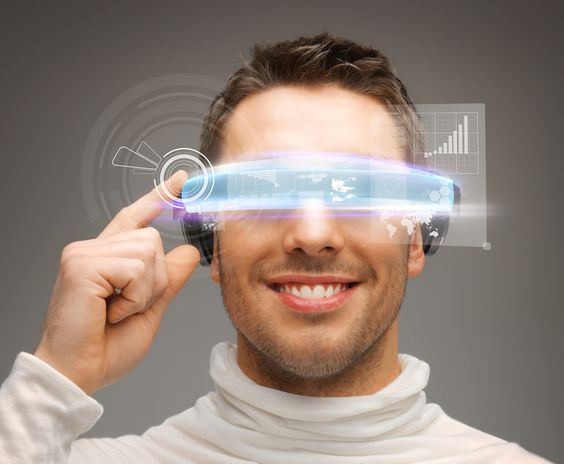
Speculative design could be defined simply as imagining the range of possible outcomes for what the future might look like, whether that's in the not so distant future such as ten years from the present or decades into the future.
Unfortunately imagining future possibilities and materialising them are two totally different kettles of fish, if it wasn't i guess we'd all be going round on hover-boards by now, "Back to the Future" style.
However, speculative design has its uses, it can help us as a collective understand emerging technologies as well as to investigate the social, cultural and ethical concerns that may arise as a result of them.
It can be exceptionally difficult to imagine a completely unique, new technology, yet it is relatively easy to conceptualise how a technology might develop and evolve over time.
Take, for example, the mobile phone. How hard would it have been to have imagined something like the iPhone in the times of having to talk to an operator in order to make a phone call on your landline, or even that you would be able to fit your mobile into your pocket when the very first versions were released. Not so much in a sense that somebody could have envisaged the iPhone 100 years ago, but I'm sure there was certainly somebody talking on a candlestick phone thinking "I wish I could carry this thing around while i use it".
The book 'Nineteen Eighty Four" by George Orwell has several examples of imagined technologies which ended up with very similar technologies materialising in years to come such as voice recognition and the telescreen, a kind of two way television, has several similar technologies today such as with laptops and their webcams as well as our mobile phones.
One only needs to watch an episode or two of 'Black Mirror' to begin to imagine the possible outcomes and available technologies of our future, this series is particularly noteworthy as it demonstrates how speculative design can be used to envisage the impacts that new kinds of technology could have socially and ethically. Its only when you put thought into what a world where you could recall all of your memories or completely immerse yourself in VR that you realise that they may also bring with them unintended, unforeseen negative consequences. What makes 'Black Mirror' so moving is that each scenario lies well within the range of plausible futures we may be faced with.
It seems that if someone can conceptualise a future technology its only a matter of time before it materialises.
I'm sure that flight seemed an impossibility before the Wright brothers began to change perspectives when they conceived the idea for an aeroplane, then people began to imagine exiting the boundaries of our planet only for this to be achieved in a relatively short time frame following the first flight of the Wright brothers prototype plane. Now with the help Elon Musk and SpaceX's technology of reusable rockets, who knows what the future will look like, space mining and colonies on other planets to mention a few.
We cannot build the future if we are always looking towards the past, speculative design is what allows us to look forward and imagine an almost limitless range of possibilities for what might be, giving us the perspective to move towards a preferable future for all and hopefully the foresight to avoid the negative consequences of the possible ones.
Next post